
Flow Battery Graphite Felt Electrode
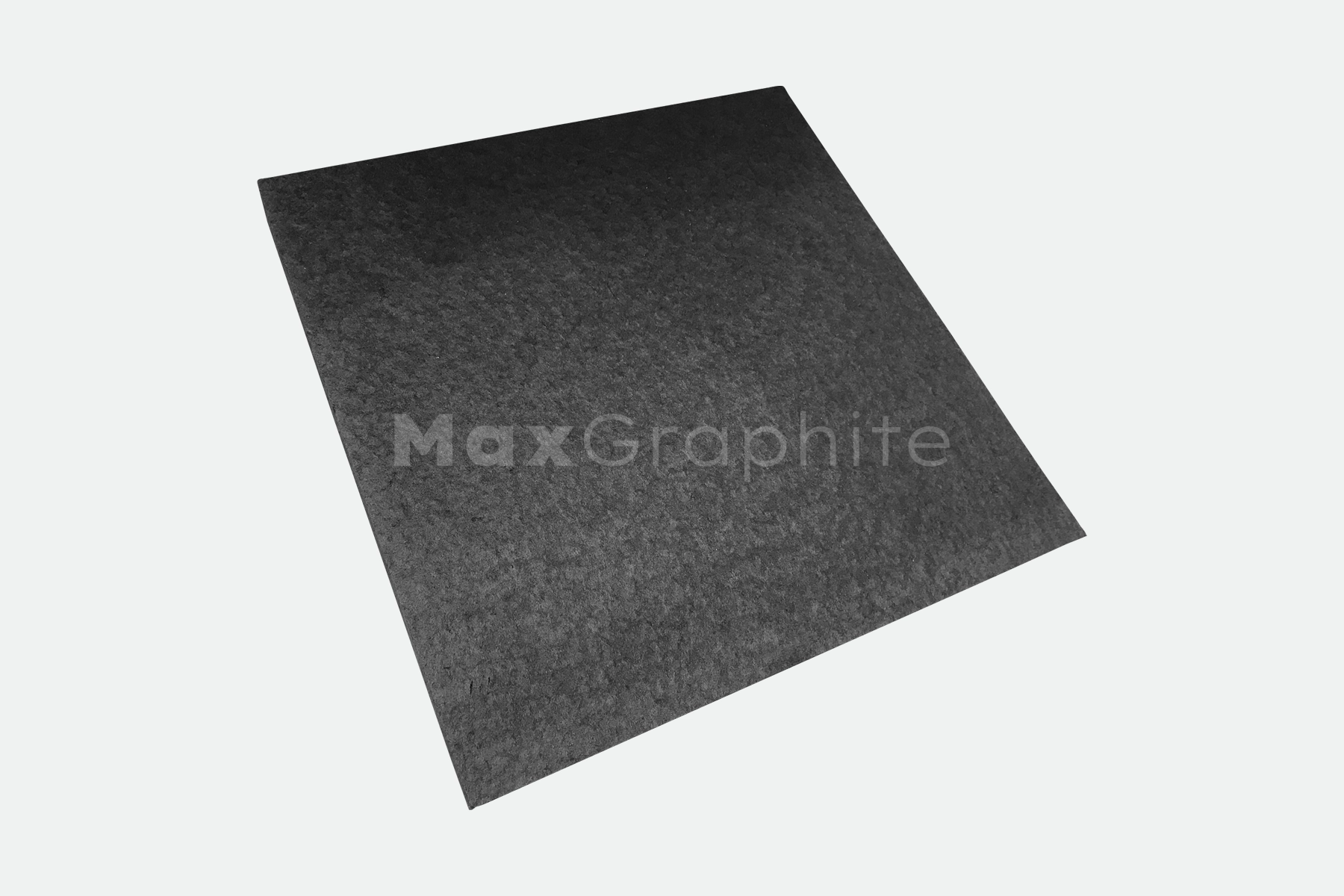
Graphite Felt Electrode is a key component in redox flow batteries. It is a porous, conductive carbon material made from graphitized carbon fibers. Its primary function is to provide a high-surface-area, three-dimensional substrate where the electrochemical reactions of the active electrolyte species (e.g., vanadium ions) occur. Unlike solid electrodes, its porous structure allows electrolyte to flow through it, enabling efficient charge transfer and scalability for large energy storage capacity. Its excellent corrosion resistance and durability in harsh electrolytes make it the material of choice for long-life flow batteries.

Specification of
Flow Battery Graphite Felt Electrode
Our graphite felt electrodes are engineered for optimal performance in vanadium redox flow batteries (VRFB) and other energy storage systems. Material: High-purity polyacrylonitrile (PAN)-based graphite felt; activation is available.
Typical Grade Specifications: All values are typical; custom grades available on request.
Certifications:
Size of
Flow Battery Graphite Felt Electrode
We provide flexible sizing to meet diverse stack designs and power requirements.
Contact us for a detailed stock list or to discuss your custom size requirements.
What is Flow Battery Graphite Felt Electrode?
Graphite felt electrode is a porous, conductive carbon structure serving as the reactive substrate in flow batteries. Unlike solid electrodes, its three-dimensional fibrous network allows electrolyte to flow through, providing a vast surface area for the vanadium ion redox reactions. It is the key to achieving high efficiency, long cycle life (over 20,000 cycles), and the inherent safety of VRFB systems.
Properties of Flow Battery Graphite Felt Electrode
- High Electrical Conductivity: Ensures low ohmic polarization and efficient current collection.
- Excellent Chemical Inertness: Resists corrosion in strong acidic/alkaline redox environments, ensuring long cycle life.
- Large Surface Area: Provides ample active sites for electrochemical reactions, improving kinetic performance.
- Good Mechanical Strength & Flexibility: Maintains structural integrity under compression within battery stacks.
- High Porosity & Permeability: Allows uniform electrolyte flow with low pressure drop.
- Tailorable Wettability: Surface can be treated to ensure complete pore filling by the electrolyte.
- High-Temperature Stability: Maintains performance under operational thermal conditions.
- Chemical Resistance: Excellent resistance to acidic/alkaline electrolytes (e.g., vanadium sulfate solutions).
- Hydrophilicity: Treated options available for improved electrolyte wettability.
Production Process of Flow Battery Graphite Felt Electrode
Our electrodes are manufactured through a controlled, multi-stage process ensuring consistency and high quality.
- Precursor Selection: High-quality PAN or pitch-based precursor fibers are chosen.
- Needling & Web Formation: Fibers are needled into a stable, uniform non-woven felt.
- Stabilization: The felt is thermally stabilized in an oxygen-containing atmosphere to render it infusible.
- Carbonization: Processed in an inert atmosphere at high temperatures (1000–1500°C) to convert the material to pure carbon.
- Graphitization: Treated at ultra-high temperatures (2500–3000°C) in an inert furnace to achieve a highly graphitic structure, enhancing conductivity and chemical stability.
- Surface Treatment (Optional): Activation or thermal treatment to modify surface functional groups, improving hydrophilicity and electrochemical activity.
- Quality Control & Cutting: Rigorous testing for resistivity, density, and uniformity, followed by precision cutting to specifications.
Applications
Vanadium Redox Flow Batteries (VRFB/VRB)
As the standard electrode material in positive and negative half-cells.
Zinc-Bromine Flow Batteries
Used as a component in the battery stack.
Other RFB Chemistries
Such as iron-chromium and organic flow battery systems.
Large-Scale Energy Storage Systems (ESS)
For grid stabilization, renewable energy integration (solar/wind), peak shaving, and backup power.
Commercial & Industrial Backup Power
Providing reliable, long-duration energy storage.
Related Materials and Products
Graphite Soft Felt