
Short Fiber (Random Fiber) CFC – Carbon/Carbon Composite
Max Graphite supplies short fiber (random fiber) CFC to engineers and procurement managers operating in heat treatment and broader high-temperature, high-performance process industries, where dimensional stability and mechanical isotropy are direct process variables. Available in three density grades — R6, R7, and R8 — with standard and purified ash-content options, our short fiber CFC is supplied as large-format plates, near-net shapes, and CNC-machined components from a single source. Max Graphite holds stock across grades and scales from prototype quantities to high-volume production runs.
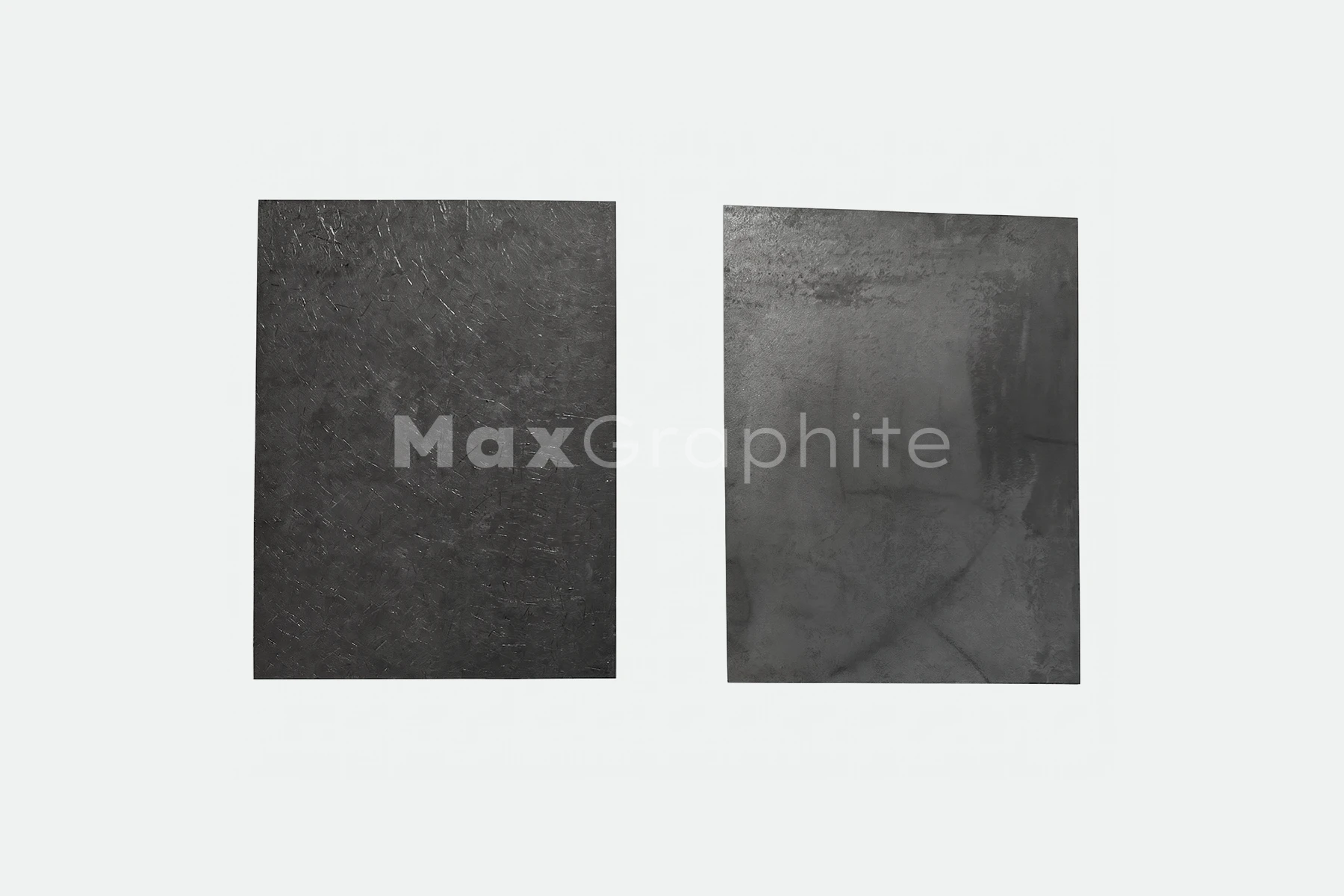
What is Short Fiber (Random Fiber) CFC Carbon/Carbon Composite?
Short fiber CFC — also referred to as random fiber carbon/carbon composite — is a non-directional carbon-fiber-reinforced carbon matrix material produced from discontinuous, randomly oriented carbon fibers uniformly dispersed in a carbonized matrix. This random fiber architecture eliminates the anisotropy characteristic of traditional 2D and 3D woven laminates, delivering near-isotropic mechanical properties, excellent thermal stability, and consistent performance in all loading directions. The absence of a preferred fiber orientation makes short fiber CFC particularly suited to large-size plates, complex near-net shapes, and high-volume applications where in-plane property uniformity is a design requirement. Graphitization at 2200°C and optional halogen purification extend the material's capability into semiconductor and ultra-high-vacuum environments where ash content is a critical process variable.



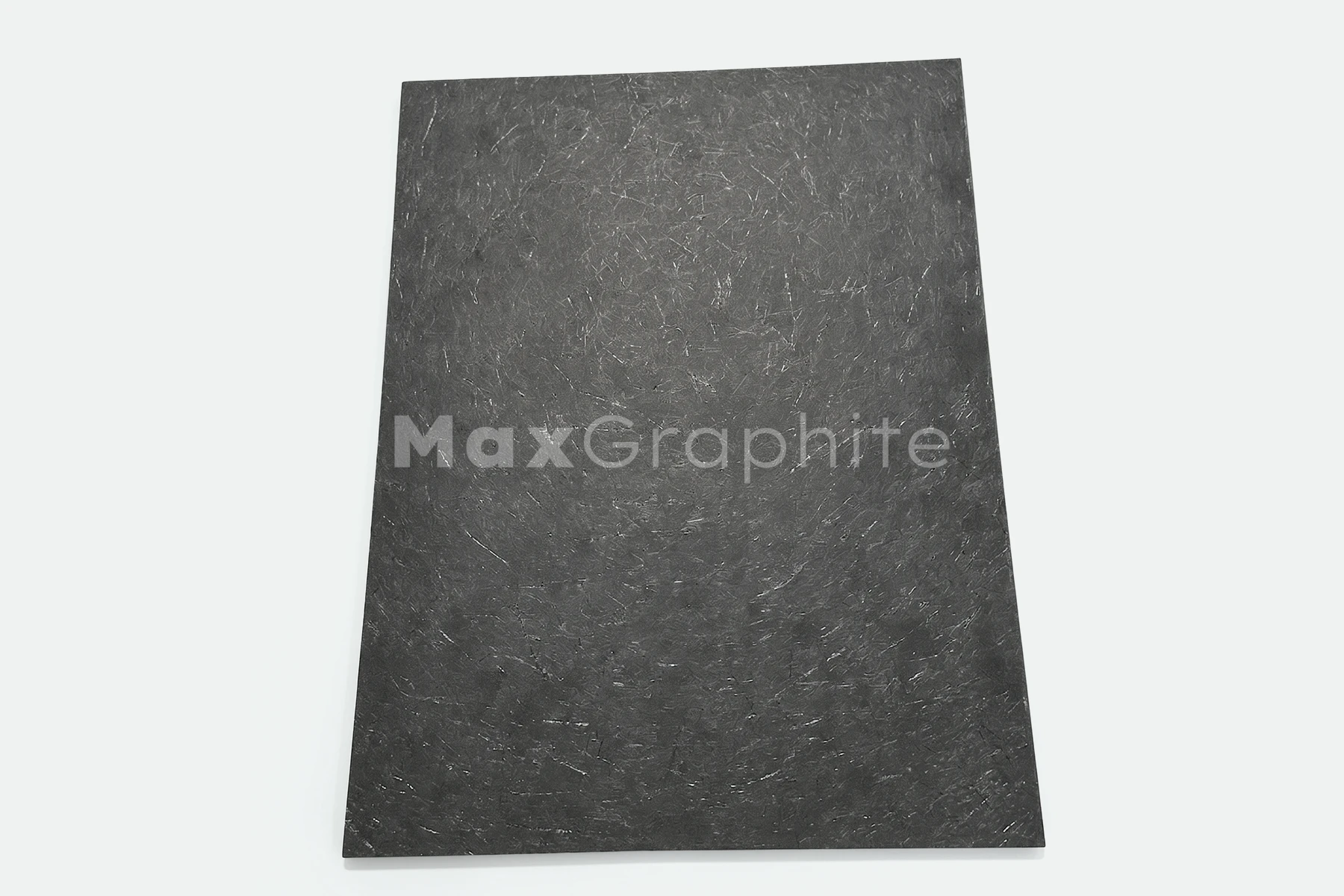

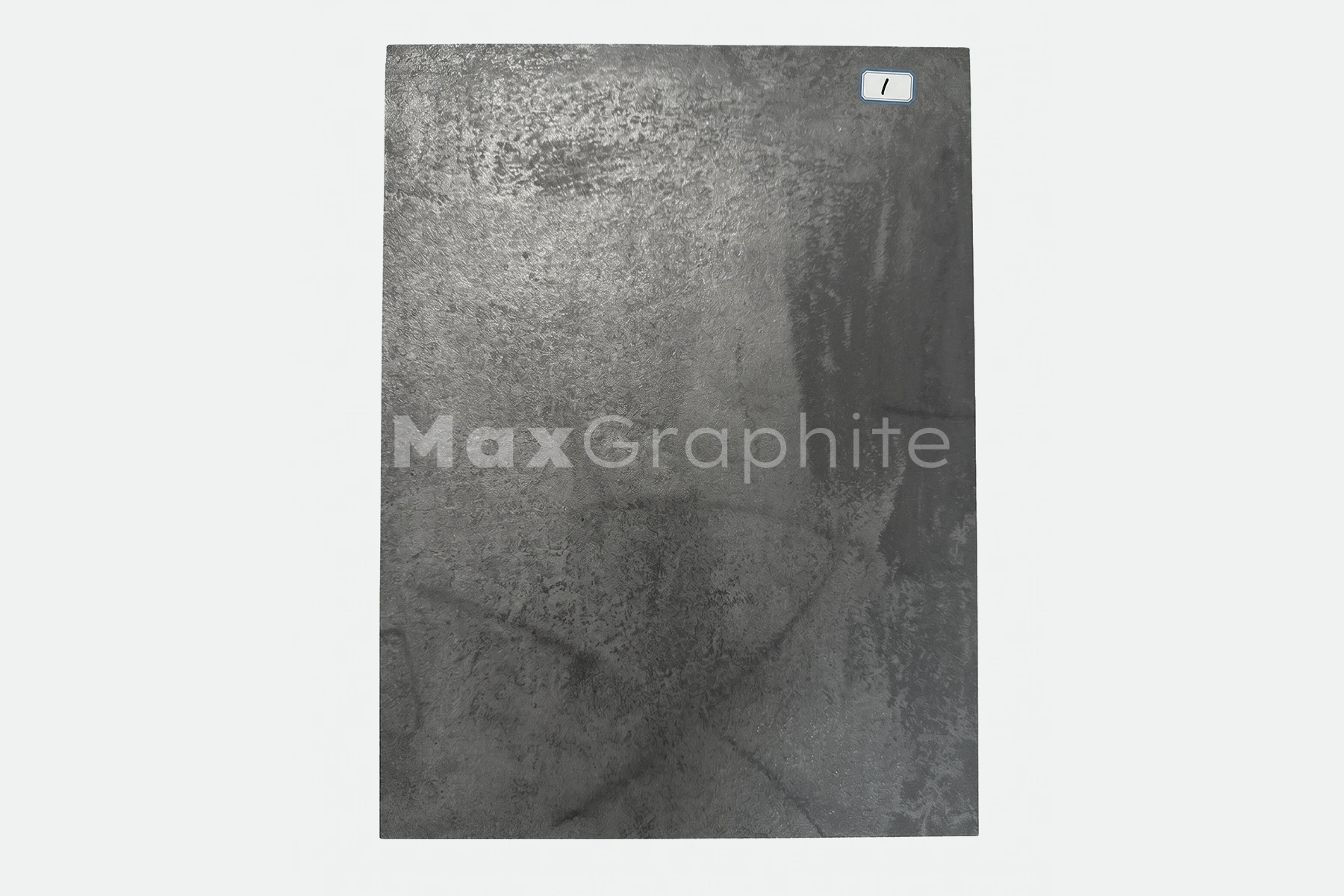
Properties of Short Fiber (Random Fiber) CFC
- Near-isotropic mechanical performance — randomly oriented short fibers eliminate directional strength bias, delivering consistent flexural, compressive, and shear properties across all in-plane orientations
- High flexural strength — R8 grade achieves flexural strength up to 240 MPa, competitive with many 2D woven CFC grades
- Low, uniform CTE — coefficient of thermal expansion is consistent across the R6–R8 grade range, supporting dimensional stability under repeated thermal cycling
- Ultralow ash content (purified grade) — halogen purification reduces ash content to ≤5 ppm, meeting the contamination requirements of semiconductor and ultra-high-vacuum processes
- Large-format plate capability — manufactured in plates up to 2900 × 1600 × 60 mm, enabling single-piece supply for oversized components
- Grade-selectable density — three density grades (R6 / R7 / R8) allow specification to balance mechanical performance, porosity, and cost
- CNC machinability — the isotropic fiber architecture supports tight-tolerance CNC machining without preferential delamination or fiber pull-out
- Cost-effective at scale — the short fiber production route avoids the complexity of 3D weaving, delivering competitive unit cost for high-volume programs
Production Process
- Chopping & Blending — Continuous carbon fiber tows are cut into short fibers (typically 3–12 mm) and mixed with thermosetting resin or pitch.
- Random Fiber Lay-up / Molding — The blend is uniformly distributed in a mold under controlled pressure to ensure random in-plane and through-thickness fiber orientation.
- Carbonization — The molded preform is heat-treated at ~1000°C to convert the matrix into amorphous carbon.
- Densification (optional) — Multiple cycles of impregnation and carbonization can be applied to reduce porosity and enhance mechanical properties.
- Graphitization — Final heat treatment at 2200°C to achieve high crystallinity, low electrical resistivity, and low ash content.
- Purification — Optional halogen purification reduces ash content to ≤5 ppm for semiconductor or ultra-high-vacuum applications.
- CNC Machining — Plates are machined to final dimensions with tight tolerances.
Applications
- Heat treatment furnaces — heating element supports, fixtures, racks, sintering trays, heat shields, and furnace covers
- High-temperature vacuum furnaces — load-bearing insulation plates and structural furnace internals
- Semiconductor process equipment — carriers for PE-CVD, high-temperature chucks, and susceptors requiring purified, low-contamination grades
- Solar manufacturing — high-temperature process carriers and susceptors
- Energy storage — flow battery electrode plates and current collector components
- Aerospace & defense — non-structural heat shields and brake backing plates
- Hot press tooling — hot press molds for industrial sintering and forming
- Wear and mechanical applications — wear-resistant sliding parts, CFC fasteners (bolts, nuts, threaded rods)
Related Materials and Products

Graphite Rigid Felt
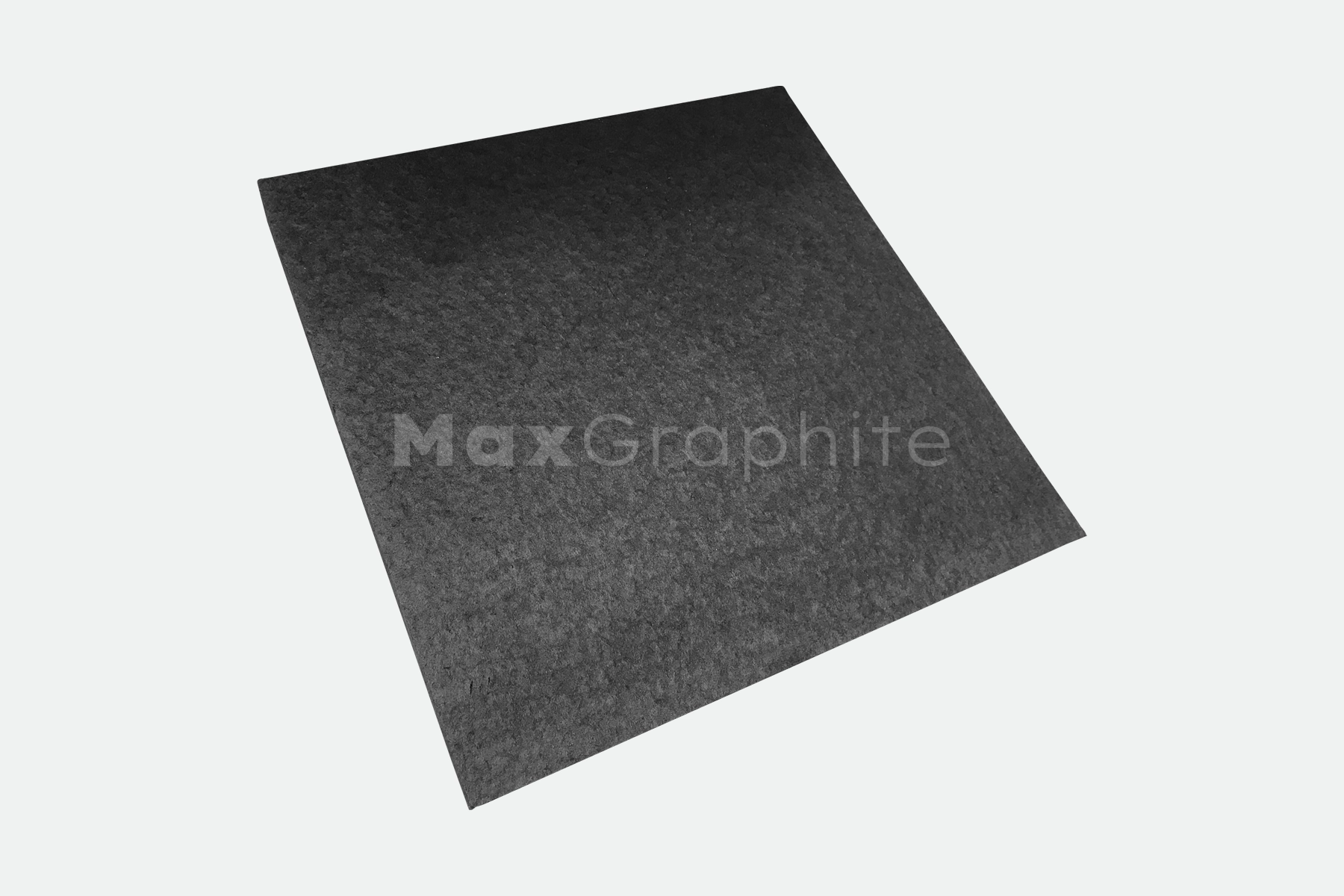
Graphite Soft Felt

Carbon Carbon Composite
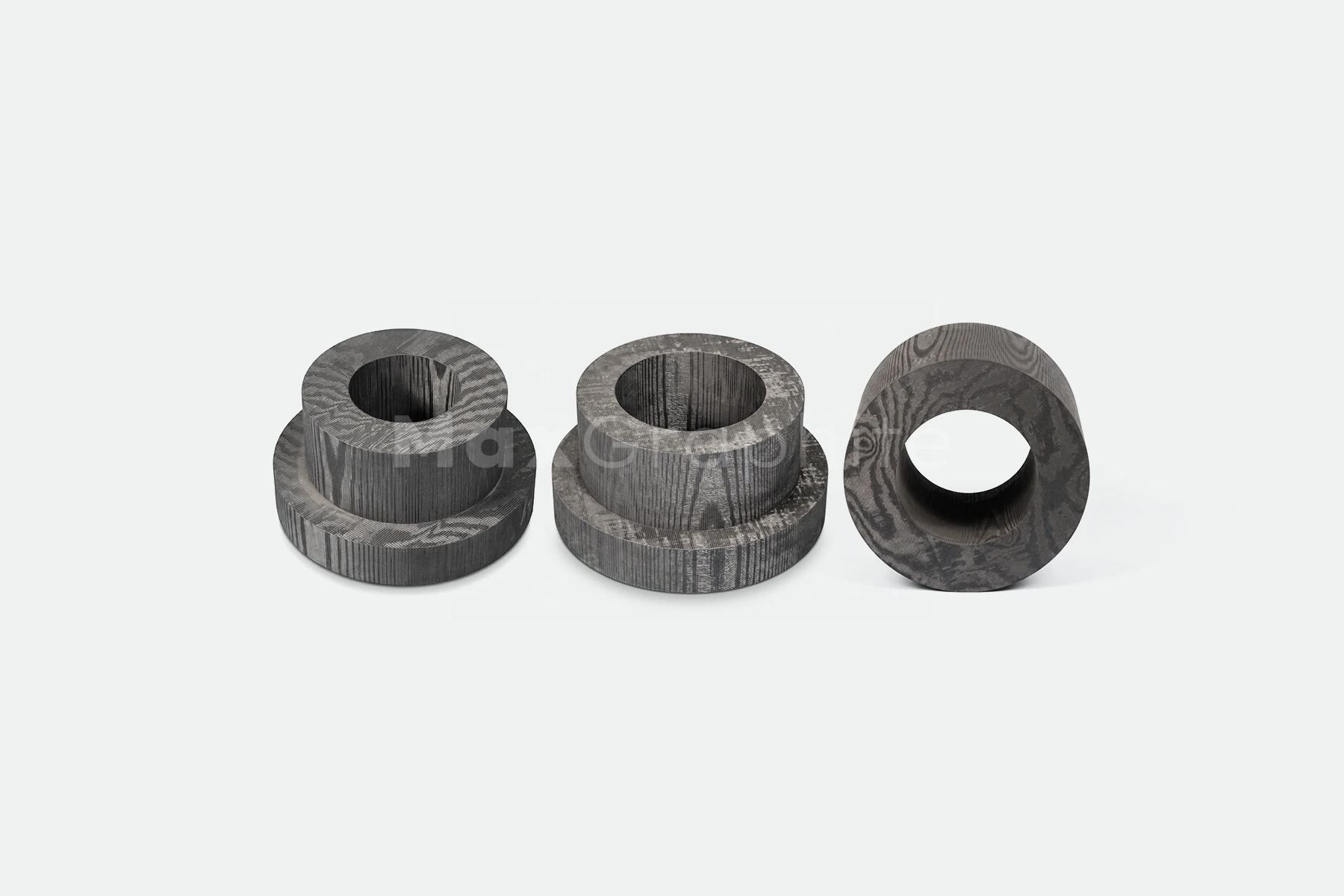
3D & 4D CFC Carbon Composite
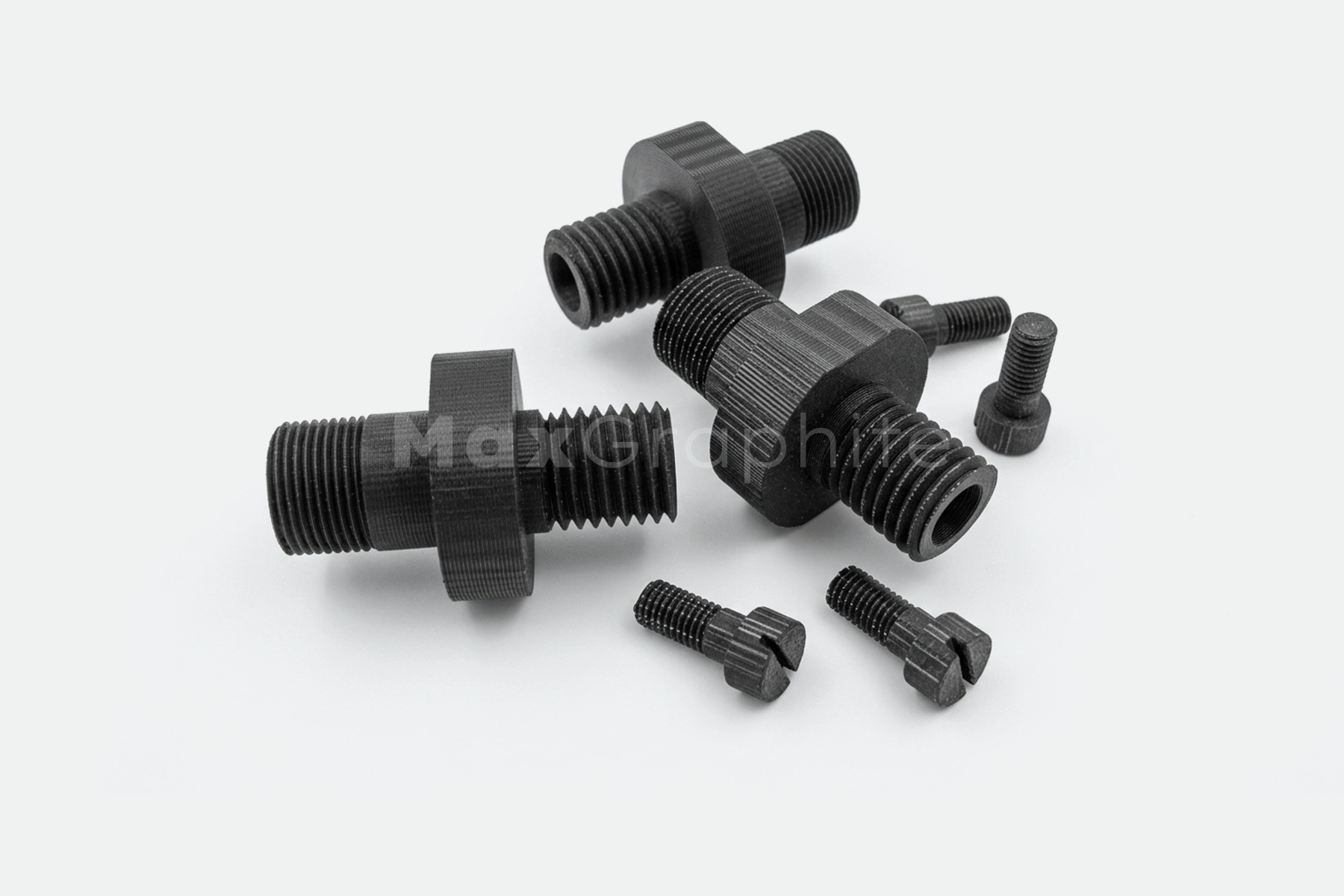
CFC Fastening Elements
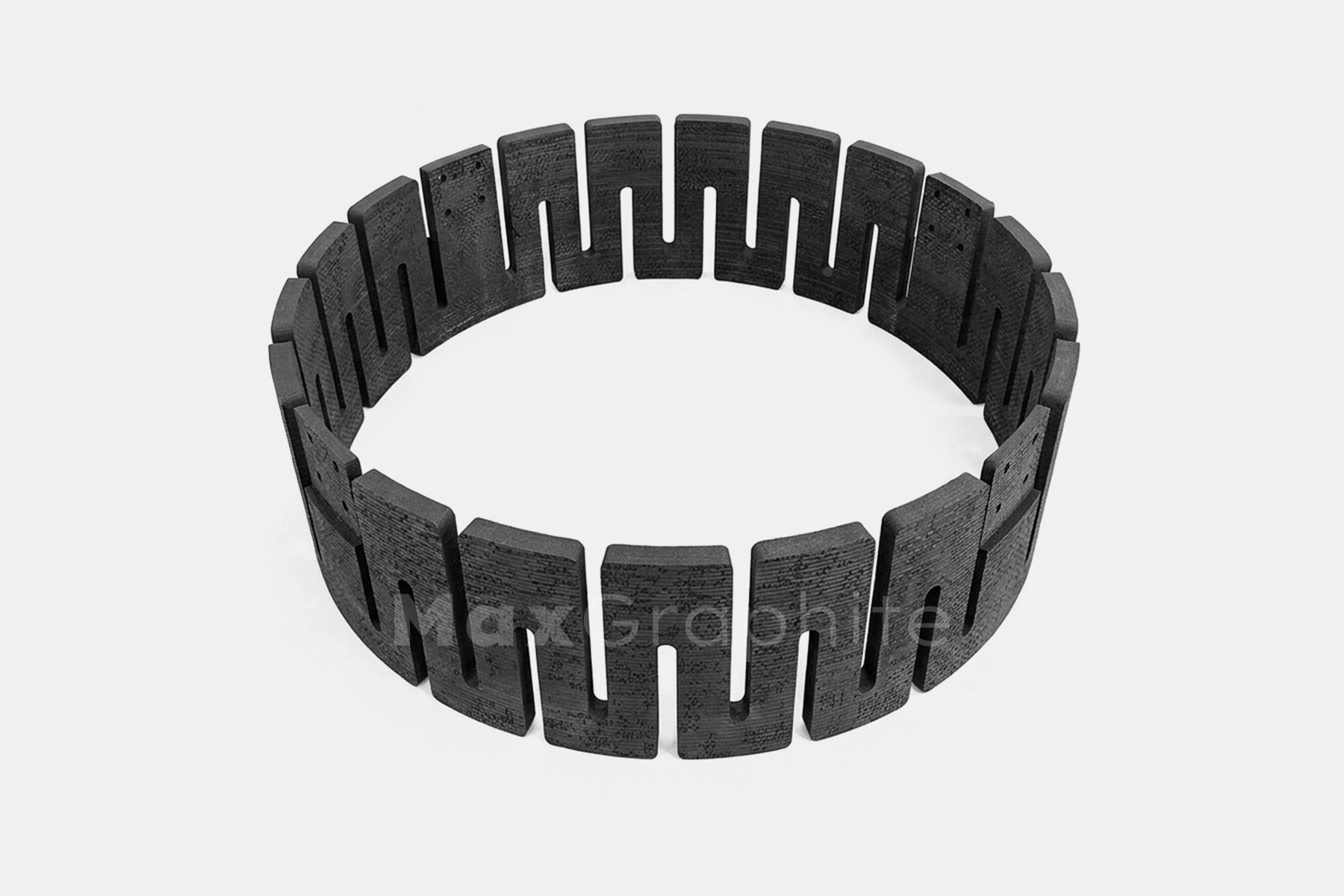
CFC Heating Elements