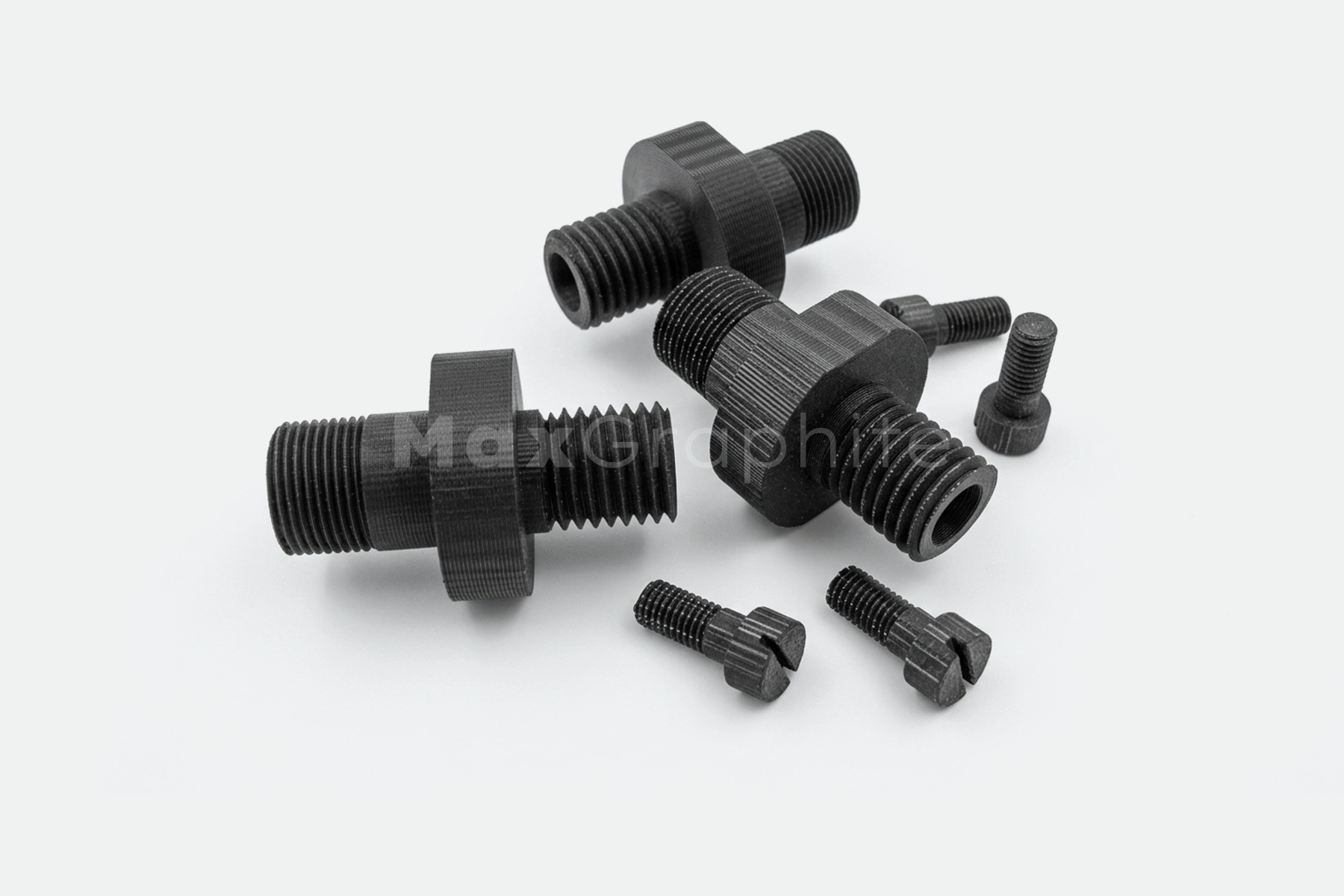
Carbon/Carbon Loading Racks for Heat Treatment
Carbon/Carbon (C/C) composite loading racks deliver a measurable performance advantage over conventional metallic fixtures in high-temperature heat treatment applications. Engineered from continuous carbon fiber reinforced carbon matrix, these racks combine ultra-low thermal mass, dimensional stability under thermal cycling, and exceptional mechanical strength at temperatures exceeding 2000°C — enabling faster cycles, lower energy consumption, and longer service life across carburizing, brazing, sintering, and vacuum hardening processes.

Why Engineers Switch to Carbon/Carbon Racks
Most heat treatment facilities begin with steel, cast iron, or nickel-alloy fixtures. The switch to C/C composite loading racks is typically driven by one or more of the following recurring operational problems — all of which C/C composite eliminates by material design.
Fixture Deformation is Disrupting Your Process
Steel and alloy trays warp, sag, and creep over repeated thermal cycles. This causes stacking misalignment, robotic handling failures, and inconsistent part positioning — leading to rework, rejected loads, and unplanned downtime. C/C composite has a CTE of 1–3 × 10⁻⁶/°C, approximately 4–5× lower than austenitic steel, and exhibits zero thermal creep at operating temperature. Racks maintain their geometry cycle after cycle, enabling consistent automated handling and repeatable load geometry.
Your Furnace Is Spending Energy Heating the Fixtures, Not the Parts
At a density of ~1.5–1.9 g/cm³ versus 7.7 g/cm³ for steel, C/C composite trays carry 5× less thermal mass per unit volume. The furnace heats and cools the workload — not the fixture. Switching from steel trays to C/C composite loading racks typically reduces per-cycle energy consumption by 30–50% and shortens heating and cooling cycle times, directly increasing throughput.
Metal Parts Are Sticking to or Being Contaminated by Fixtures
At elevated temperatures, metallic workpieces can diffusion-bond to metallic fixture surfaces — especially during vacuum brazing, carburizing, and sintering operations where part surfaces are metallurgically active. C/C composite is chemically inert to most metallic alloys and provides a self-lubricating carbon surface that prevents adhesion, eliminating part surface damage and contamination on separation.
Fixtures Are Failing Too Quickly
Metallic fixtures embrittle, oxidize, and fatigue-crack under repeated thermal cycling. C/C composite does not embrittle, does not corrode in vacuum or inert atmospheres, and maintains or improves mechanical strength at operating temperature. Under controlled atmosphere conditions, C/C loading racks demonstrate service life 3–5× greater than comparable steel fixtures, reducing replacement frequency and total fixture cost.
Technical Specifications
All values are typical and subject to variation. For technical data sheets or custom recommendations, please contact Max Graphite.


Configurations and Customization
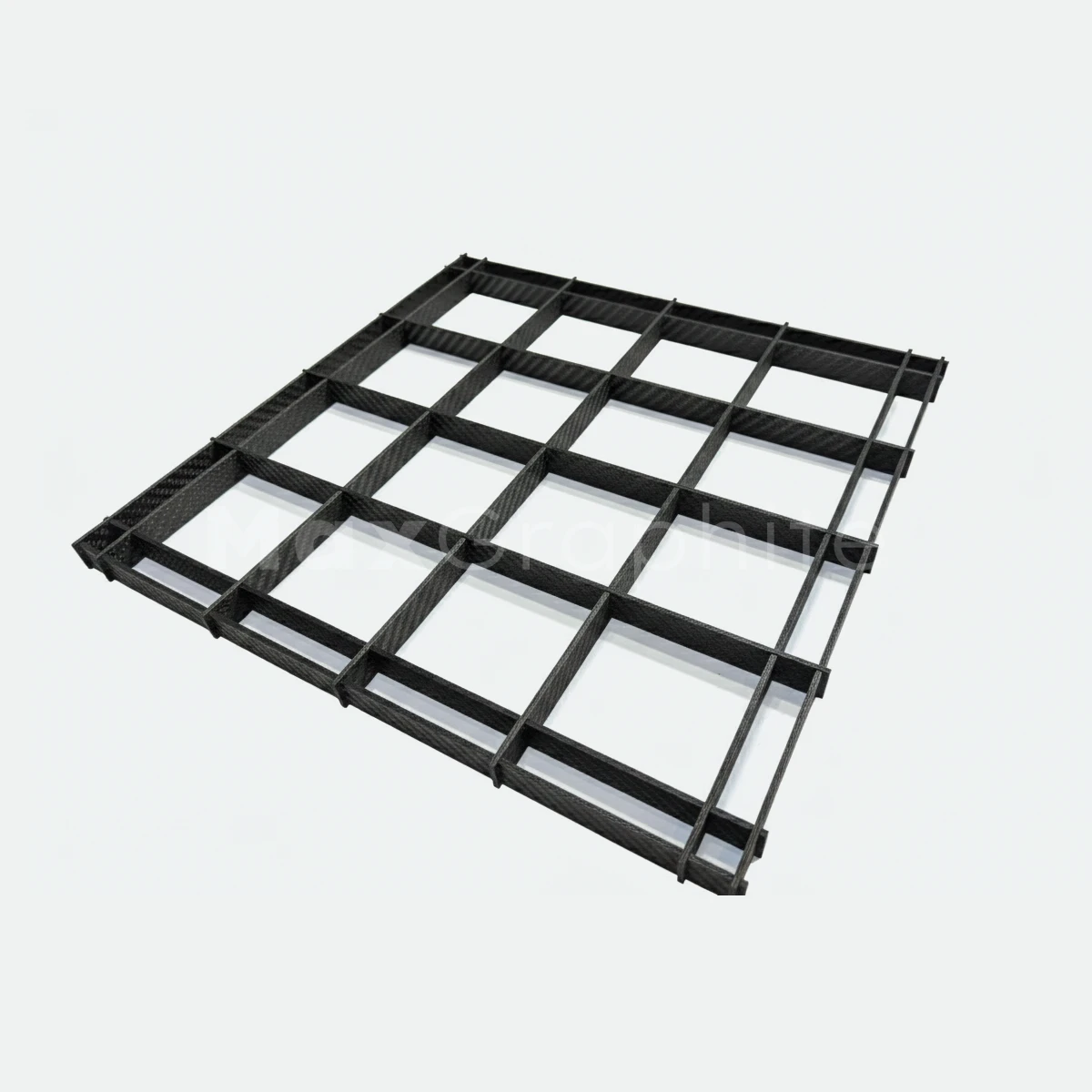
Max Graphite supplies C/C loading rack systems precision-machined to your furnace geometry, load capacity, and process requirements. Available configurations include:
- Flat trays and plates — for layered batch loading
- Grid and perforated baskets — for gas flow uniformity around workpieces during carburizing and quenching
- Multi-tier rack assemblies — for maximizing furnace load per cycle
- Fixture pins, setters, and support elements — precision-machined contact components
- Coating options — uncoated (vacuum/inert), SiC-coated (oxidizing atmosphere to ~1650°C), or PyC-coated (enhanced chemical resistance)
- CNC-machined custom geometries — produced to your engineering drawings
Applications
C/C composite loading racks are the established fixture solution for high-temperature, controlled-atmosphere thermal processing:
- Vacuum Brazing — Distortion-free fixturing with no braze alloy contamination from fixture contact
- Low-Pressure Carburizing (LPC) and Case Hardening — Full thermal duty cycle tolerance with self-lubricating, non-sticking surface
- Gas Quenching — Structural integrity maintained through rapid high-velocity convective cooling
- Vacuum Annealing and Stress Relieving — Stable, non-deforming support for precision aerospace and medical components
- Sintering of PM and MIM Components — Chemically inert, stable support with no metallic contamination risk
- Diffusion Bonding — Clean, rigid fixturing for aerospace structural assemblies