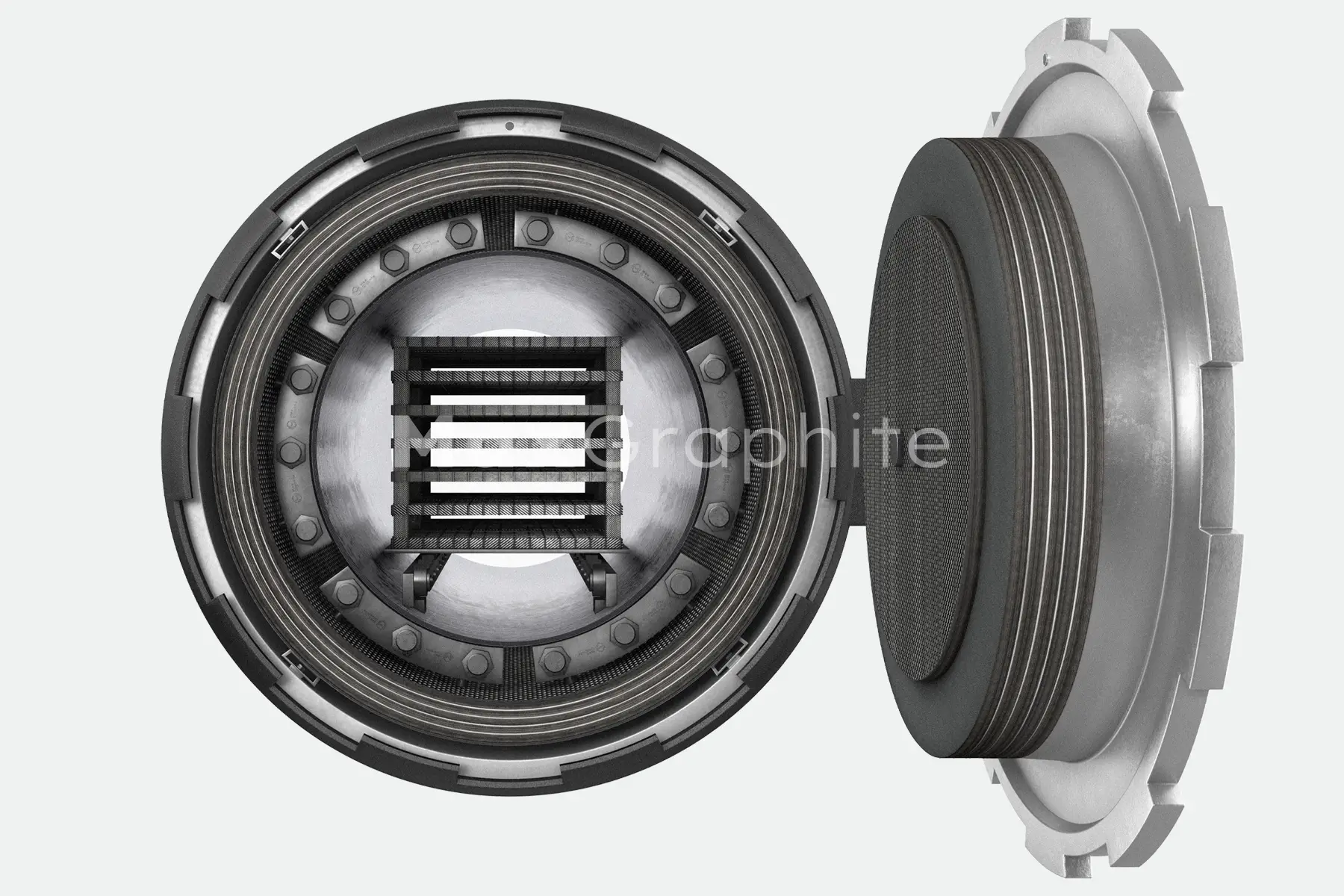
Carbon Fiber Soft Felt Manufacturing: Precursors, Web Forming, and Process Control
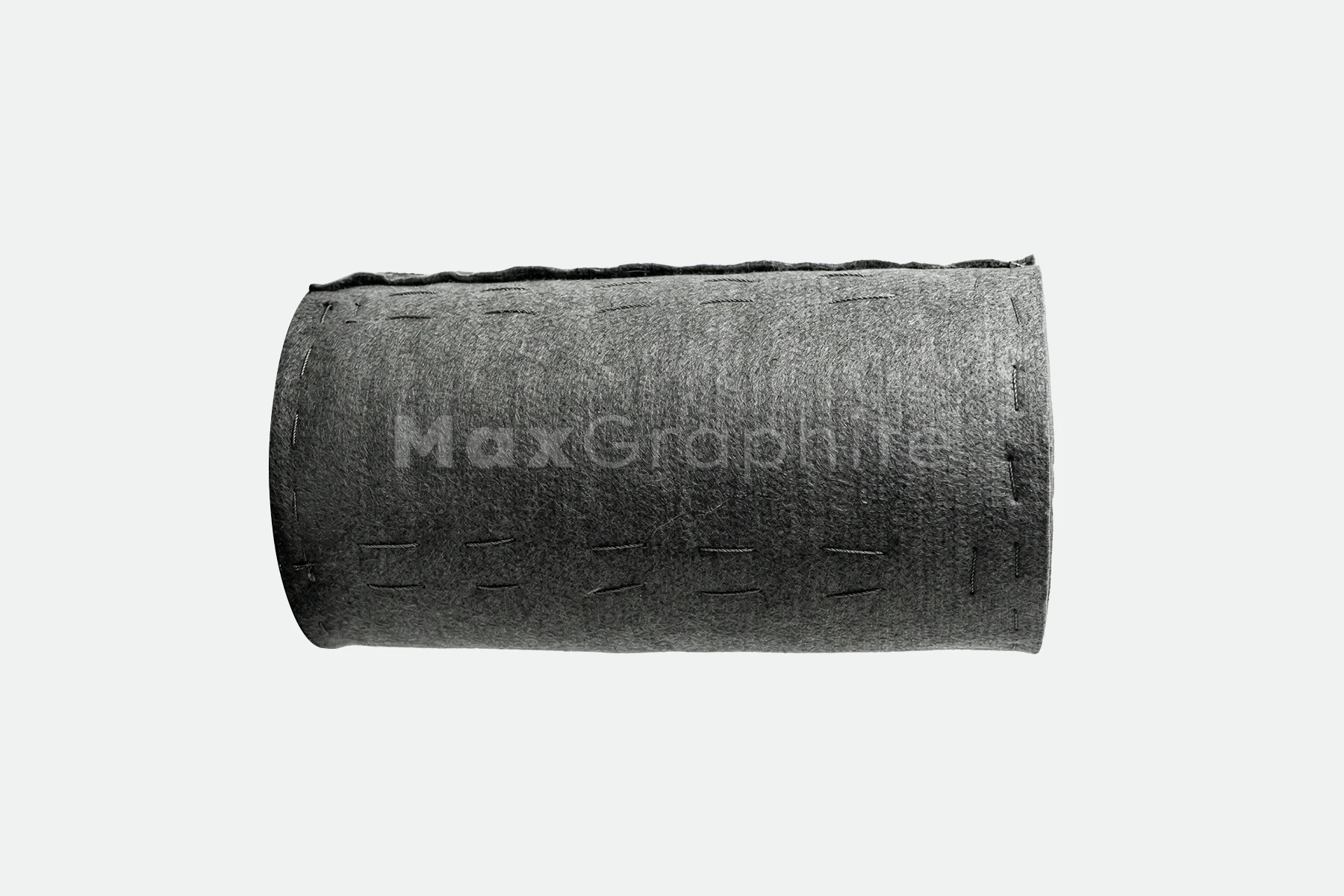
What Distinguishes Carbon Felt from Graphite Felt?
Carbon soft felt typically undergoes heat treatment at approximately 1000°C. At this temperature, carbonization is complete, but the microstructure retains significant disordered regions.
Graphite soft felt requires processing above 2000°C, driving the carbon atoms toward a more ordered, graphite-like crystalline arrangement. This structural transformation yields improved dimensional stability at extreme temperatures and reduced outgassing.
These temperature thresholds are not absolute standards; specifications vary among manufacturers. However, the general principle holds: graphite felt offers superior performance in ultra-high-temperature environments where thermal stability and purity are paramount.
Precursor Selection: The Foundation of Performance
The properties of carbon fiber soft felt are largely determined by the precursor fiber. Three main precursor routes dominate industrial production: polyacrylonitrile (PAN), rayon (cellulose-based), and pitch.
PAN-Based Carbon Fiber: Mature Process, Broad Application
PAN-based fiber represents the largest segment of carbon fiber production. The manufacturing sequence begins with thermal oxidative stabilization at 200–300°C, where cyclization and dehydrogenation reactions convert the linear polymer into an infusible ladder structure. Subsequent carbonization at 1000–1700°C in an inert atmosphere completes the transformation.
Typical carbon yield for PAN-based fiber runs approximately 50–55%. The mature supply chain and well-established processing parameters make PAN-based soft felt a cost-effective choice for most thermal insulation applications.
Rayon-Based Carbon Fiber: High-Temperature Performance and Purity
Rayon-based (cellulose) carbon fiber follows a different route. Rather than first producing carbon fiber tow for subsequent needling, manufacturers often carbonize and graphitize cellulose fiber mats directly.
Cellulose undergoes greater mass loss during pyrolysis than PAN, resulting in lower yield and higher production costs. Despite this economic disadvantage, rayon-based soft felt maintains a significant presence in high-temperature insulation applications. The reasons are performance-driven: excellent shrinkage control at elevated temperatures, favorable thermal conductivity characteristics, and the ability to achieve high purity levels.
Pitch-Based Carbon Fiber: Understanding the Two Types
Isotropic pitch fiber has a disordered microstructure with lower modulus and relatively low thermal conductivity. This type is suitable for insulation applications, though it appears more commonly in rigid felt (boards and cylinders) rather than soft felt.
Mesophase pitch fiber features highly oriented graphitic crystallites, yielding thermal conductivity in the range of 200–300 W/m·K. Designed specifically for thermal management applications, mesophase pitch fiber is inherently unsuitable for thermal insulation.
Pitch-based fiber offers lower raw material costs and carbon yields exceeding 70%. However, the fibers exhibit poor self-supporting characteristics during processing, typically requiring mechanical support during stabilization.
Web Forming: Building Structure from Dispersed Fibers
Web forming is the critical process step that organizes dispersed short fibers into a uniform web with controlled thickness, porosity, and fiber orientation. This web provides the foundation for subsequent needling consolidation.
Key quality metrics for the formed web include: basis weight uniformity (g/m²), thickness and loft, fiber orientation ratio (machine direction versus cross direction), pore structure (size distribution and interconnectivity), and freedom from contaminants, tangles, or hard spots.
Carding Plus Cross-Lapping
This is the most widely used dry-laid web forming route, suitable for staple fibers in the 30–80 mm length range.
The process sequence runs: opening and cleaning → blending → fine opening → metered feeding → carding (forming a thin web) → cross-lapping (building to target basis weight) → pre-compression or pre-needling → main consolidation.
Carding tends to align fibers in the machine direction. Cross-lapping compensates by layering the web at angles, improving the balance between machine and cross-direction properties. This combination provides precise control over basis weight and thickness, making it the established approach for needled soft felt production.
Air-Laying
Air-laying disperses fibers in an airstream and deposits them onto a forming screen, producing webs with more random fiber orientation and higher loft.
This route suits shorter or more brittle fibers, or applications requiring greater isotropy in the plane. Air-laying avoids the mechanical damage that card clothing can inflict on fragile fibers. However, the process demands careful control of airflow uniformity and robust dust management systems.
Wet-Laying
Wet-laying disperses fibers in water, then forms and dewaters the web using papermaking techniques.
This approach handles very short fibers (millimeter scale) and delivers paper-like uniformity. The process relies heavily on dispersants, retention aids, and binder systems. In carbon fiber soft felt production, wet-laying serves primarily for specialty composite paper-felts or ultra-thin products.
Process Control: Sensitivity Varies by Precursor
Optimal process parameters depend significantly on the precursor type. What works for PAN-based fiber may damage pitch-based material.
Control Points for PAN-Based Soft Felt
Opening and dust removal: PAN fiber tolerates effective opening, but excessive action increases dust generation. Multiple gentle opening stages outperform single aggressive passes. Rising dust collection rates signal over-processing.
Feed metering: High-temperature insulation felt cannot tolerate localized dense spots or thin areas. Feed rate fluctuations are often the root cause. Online weighing systems, multi-bin blending, and measures to prevent bridging help maintain consistent feed.
Carding parameters: Carding intensity should ramp gradually from low to high. Control the gap and speed ratio between card clothing surfaces to minimize opposing shear forces. Carbon fiber conductivity creates static and airborne fiber issues, requiring enhanced suction and electrical cabinet sealing.
Cross-lapping: Layer bonding is generally manageable with PAN-based webs. Match traverse speed to belt speed, ensure adequate overlap ratio, and apply light pre-compression or pre-needling before main needling to reduce delamination risk.
Control Points for Pitch-Based Soft Felt
Opening: Isotropic pitch fiber is more brittle, and the raw material may have natural crimp and loft. Aggressive opening straightens the crimp, reduces bulk, and significantly increases dust. Preserving fiber structure takes priority.
Web forming route selection: When fiber length is adequate and controllable, carding plus cross-lapping is feasible but requires gentler settings. For shorter, more brittle fibers, or when higher loft and isotropy are required, air-laying is the preferred route to avoid card-induced damage.
Pre-consolidation: Pitch-based webs are loftier and trap more air between layers, appearing thick but structurally weak. Light pre-compression or pre-needling locks the layers together before main needling prevents delamination under aggressive needling action.
Matching Process to Application Requirements
Carbon fiber soft felt manufacturing is not a single pathway. It requires systematic matching of precursor selection, web forming method, and process parameters.
For general insulation applications balancing cost and process stability, PAN-based fiber with carding and cross-lapping provides a mature, reliable solution.
For extreme temperature environments demanding tight control over purity and outgassing, rayon-based soft felt warrants consideration despite higher cost.
For specific loft or isotropy requirements, particularly with shorter or more fragile fibers, air-laying may be the better web forming choice.
Understanding these process variables and their interactions enables better decisions when balancing performance, cost, and supply considerations.
Let's talk
Looking for carbon fiber soft felt that meets your thermal and purity specifications? Our technical team can help you identify the right grade for your furnace application.
Why Dimensional Accuracy in Machined Graphite Components Matters — and How It's Verified
Max Graphite: Vertically Integrated Graphite Manufacturer in China