Why Dimensional Accuracy in Machined Graphite Components Matters — and How It's Verified
A tolerance problem that hides in plain sight
Graphite components fail in ways that are easy to miss at the receiving dock. A crucible sits slightly off-center in its fixture. A heating element makes uneven contact with the support structure. A sealing ring fits, but not quite flush. None of these deviations look like defects. They become defects later — during the process run, when the cost of failure is highest.
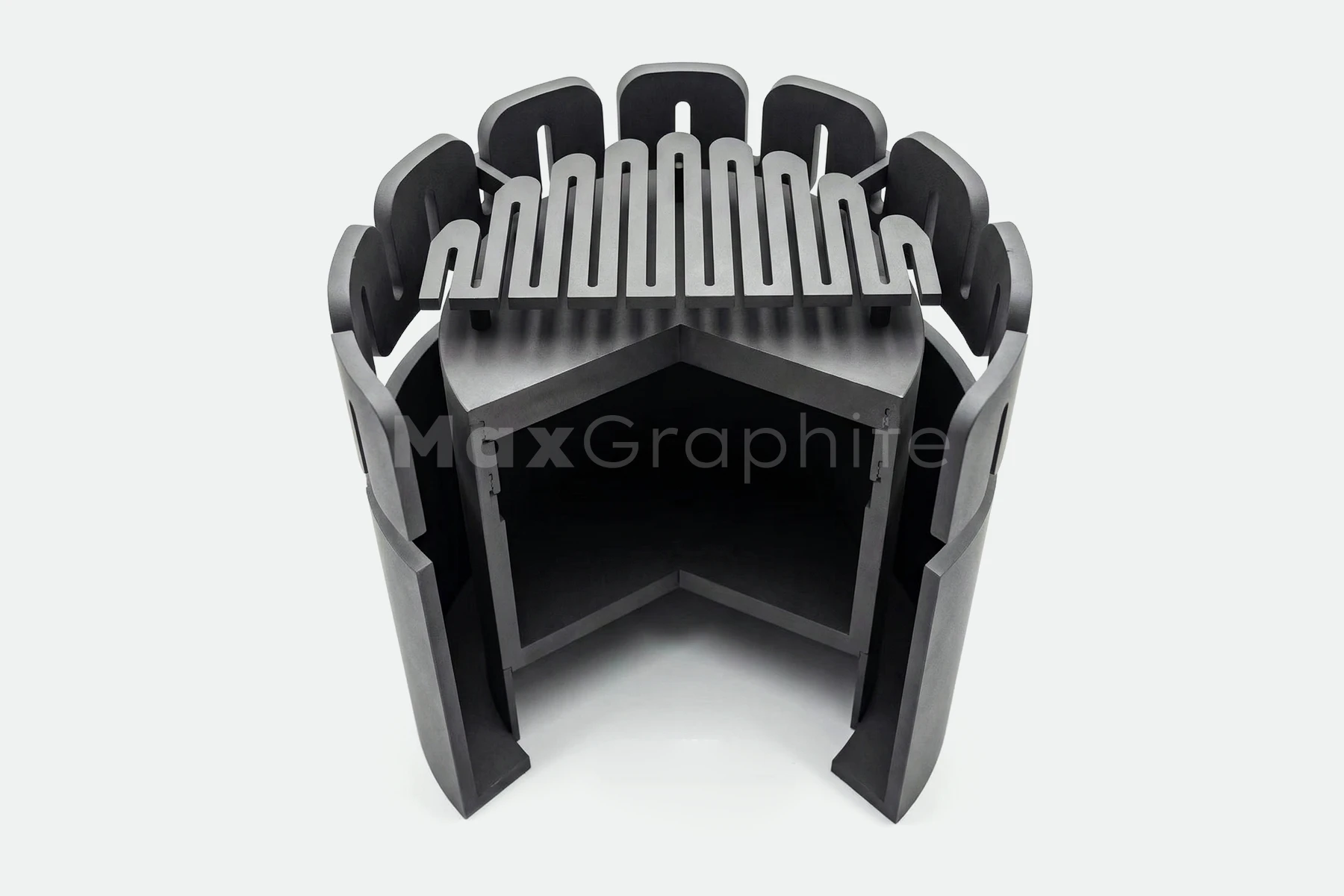
Dimensional accuracy in machined graphite is not a secondary quality concern. For components operating inside vacuum furnaces, crystal growth systems, and high-temperature sintering chambers, geometry is function. A deviation of 0.1 mm in the wrong place can mean inconsistent thermal distribution, mechanical stress at the contact point, or premature component wear.
This is not theoretical. It is the daily reality of anyone sourcing graphite components for precision thermal applications.
Why graphite makes dimensional control harder than metal
Graphite is not a metal. This sounds obvious, but its implications for machining and inspection are underappreciated by procurement teams who evaluate components primarily on price and lead time.
Three material characteristics make dimensional control in graphite more demanding than in steel or aluminum:
• Brittleness. Graphite fractures rather than deforms. Machining forces that would produce a burr in metal produce a micro-fracture or edge chip in graphite. These surface imperfections are not always visible to the eye but can affect seating and fit.
• Grain structure and isotropy. Extruded, molded, and isostatically pressed graphite have different grain orientations. Machining across grain boundaries behaves differently from machining along them. The grade selection determines what tolerances are realistically achievable — and at what tool wear cost.
• Thermal expansion anisotropy. Graphite expands differently along different axes when heated. A component measured at room temperature may behave differently at 1,200°C. This means machining tolerances must account for in-service thermal expansion, not just ambient geometry.
A machining shop that treats graphite like a soft metal will produce components that look acceptable but perform inconsistently. The difference is in process knowledge and measurement discipline.
Where coordinate measurement fits in graphite QC
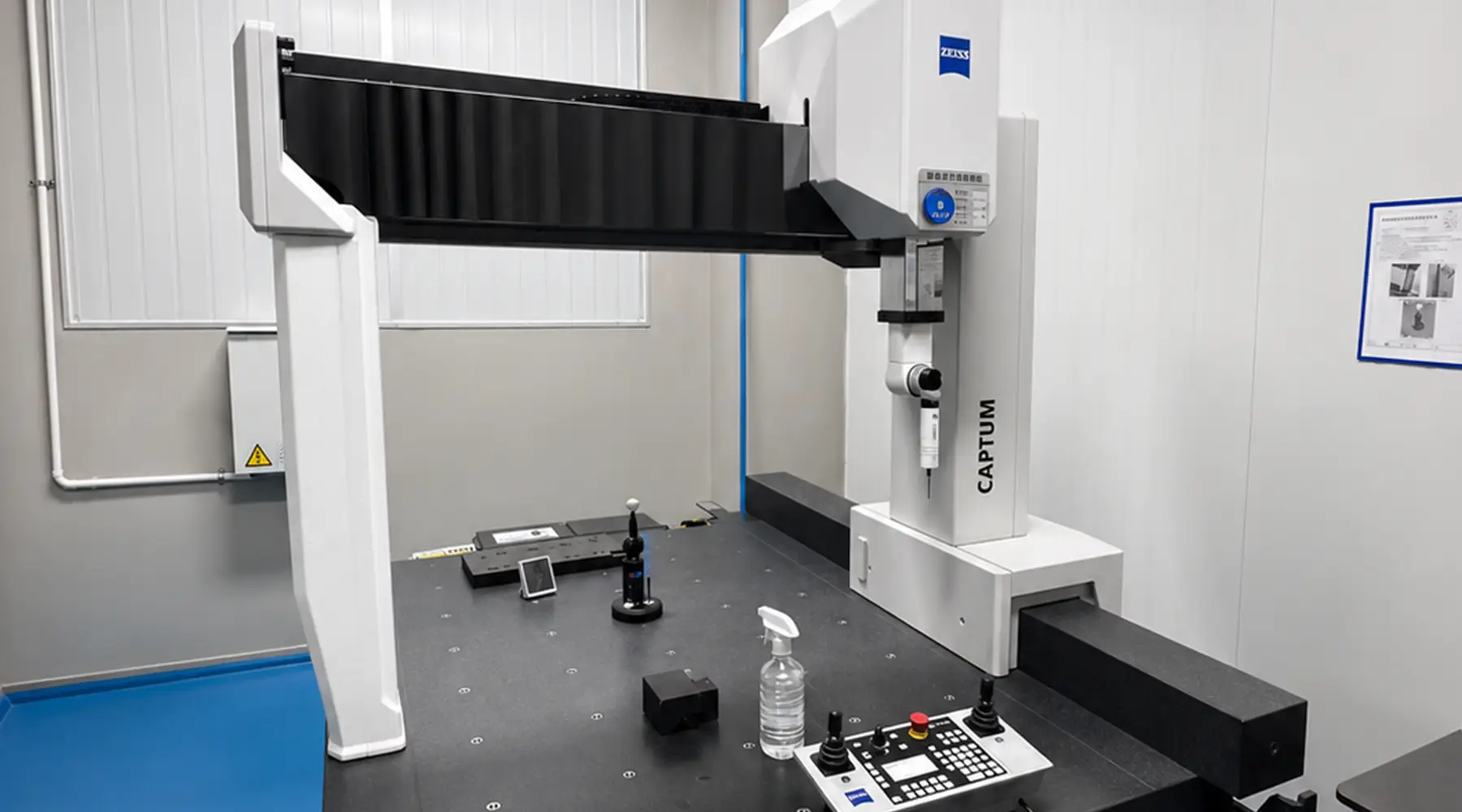
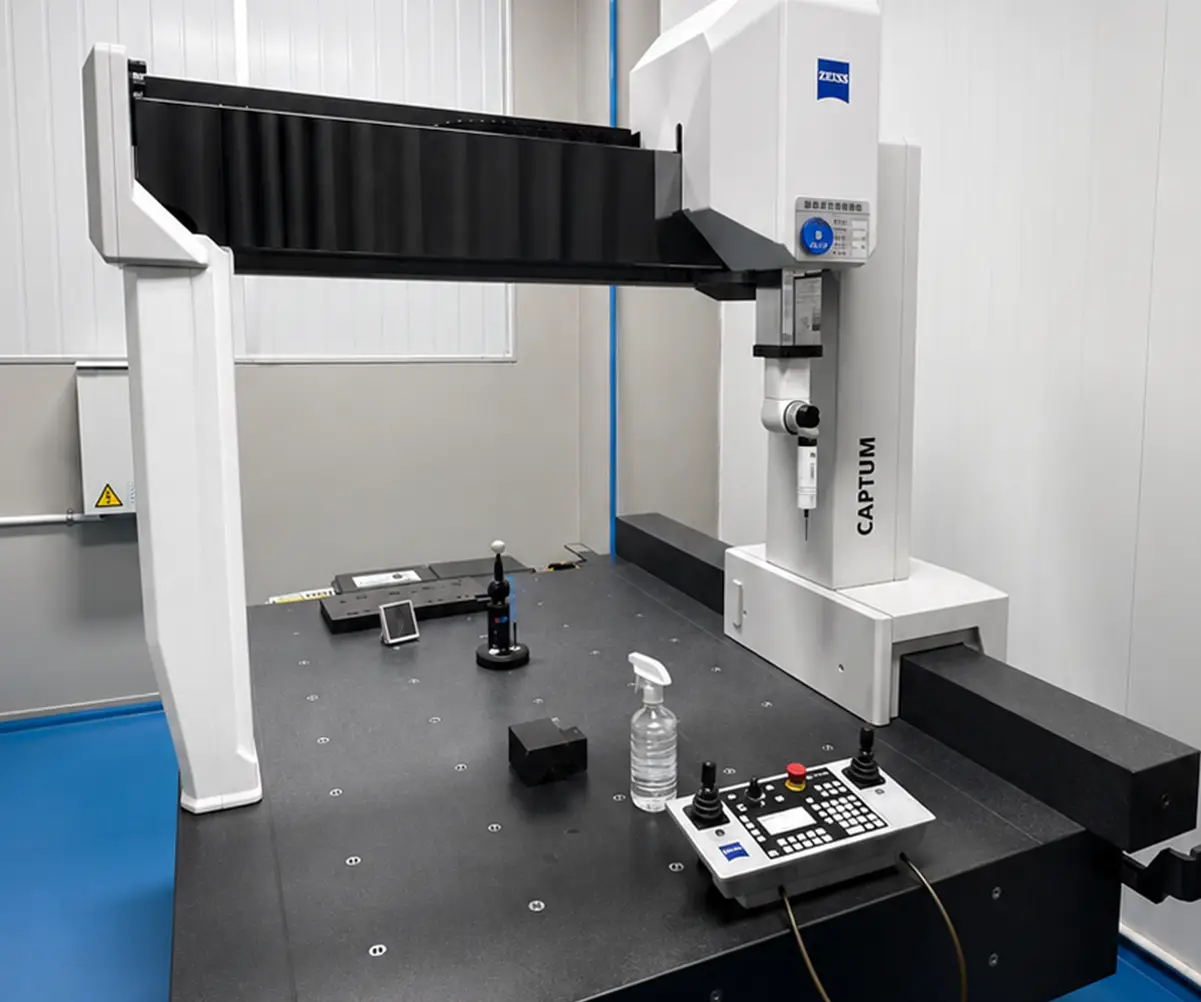
Coordinate Measuring Machines (CMMs) are the standard tool for verifying complex three-dimensional geometries against a design drawing. A probe makes contact with the component surface at defined points, recording precise spatial coordinates. The system compares these measurements against the nominal geometry from the customer's drawing and flags any deviation outside the specified tolerance band.
For machined graphite components, CMM inspection is particularly relevant in three scenarios:
• Complex geometries. Graphite components for semiconductor crystal growth — susceptors, crucibles, guide rings — often involve precise bore diameters, concentricity requirements, and surface flatness tolerances that cannot be reliably verified with hand gauges alone.
• Custom fabrication. When a customer provides a drawing for a non-standard component, first-article inspection via CMM confirms that the machined part matches the drawing before volume production begins. This catches tool setup errors before they become batch problems.
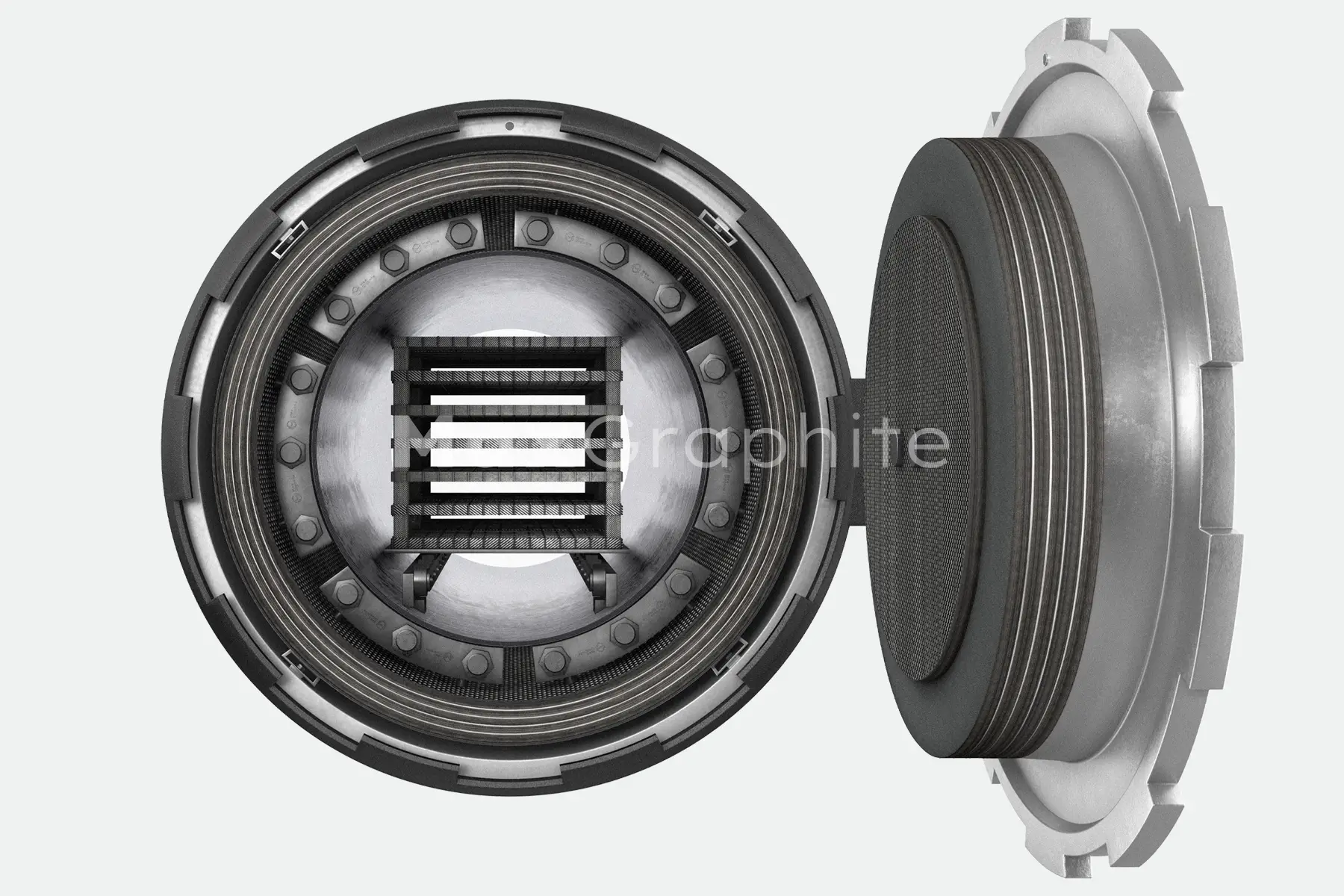
• High-tolerance applications. Vacuum furnace components — heating elements, insulation supports, loading fixtures — operate under mechanical load at temperature. Dimensional deviations that are cosmetically insignificant at room temperature can become structural issues at 1,400°C.
CMM inspection is not a substitute for process control. It is a verification layer that confirms process control is working — and catches the cases when it is not.
What a 99% conformity rate actually requires
Max Graphite reports 99% product conformity across machined graphite output. A number like that does not come from optimistic self-assessment. It comes from a measurement system that catches non-conforming parts before they ship.
Behind that figure are three operational requirements that any serious graphite machining operation has to meet:
• Inspection against drawing, not against sample. Conformity means the part matches the customer's specification, not a previously accepted part. Without CMM or equivalent metrology, conformity is relative rather than absolute.
• Documentation that travels with the part. A conformity rate is a claim. Measurement records — dimensional inspection reports tied to specific batch and drawing revision — are evidence. The difference matters when a customer needs to trace a field issue back to a specific production run.
• In-house engineering accountability. Max Graphite operates with around 50 graphite chemists and engineers on staff. When a measurement flags a deviation, the engineering team analyzes root cause — whether it is a tooling issue, a material lot variation, or a process parameter — before the batch is released or rejected.
What you should ask about dimensional verification
When evaluating a graphite machining supplier, dimensional verification capability is a practical differentiator. Here are four questions worth asking:
• What measurement equipment do you use, and is it on-site? Third-party inspection adds lead time and can create version-control issues if the drawing is revised. On-site metrology means the machining team and the inspection team are in the same facility.
• Do you provide dimensional inspection reports with shipment? A supplier who measures but does not document is harder to audit. Inspection reports tied to specific batch numbers are the minimum standard for regulated industries.
• What is your first-article process for custom components? First-article inspection confirms that a new drawing has been correctly interpreted before volume production begins. Ask what the supplier does when first-article measurements are outside tolerance.
• Can you accommodate drawing revisions mid-production? Custom graphite components often go through design iterations. A supplier with in-house metrology can re-verify against a revised drawing quickly. A supplier relying on external inspection cannot.
Accessible Excellence in dimensional control
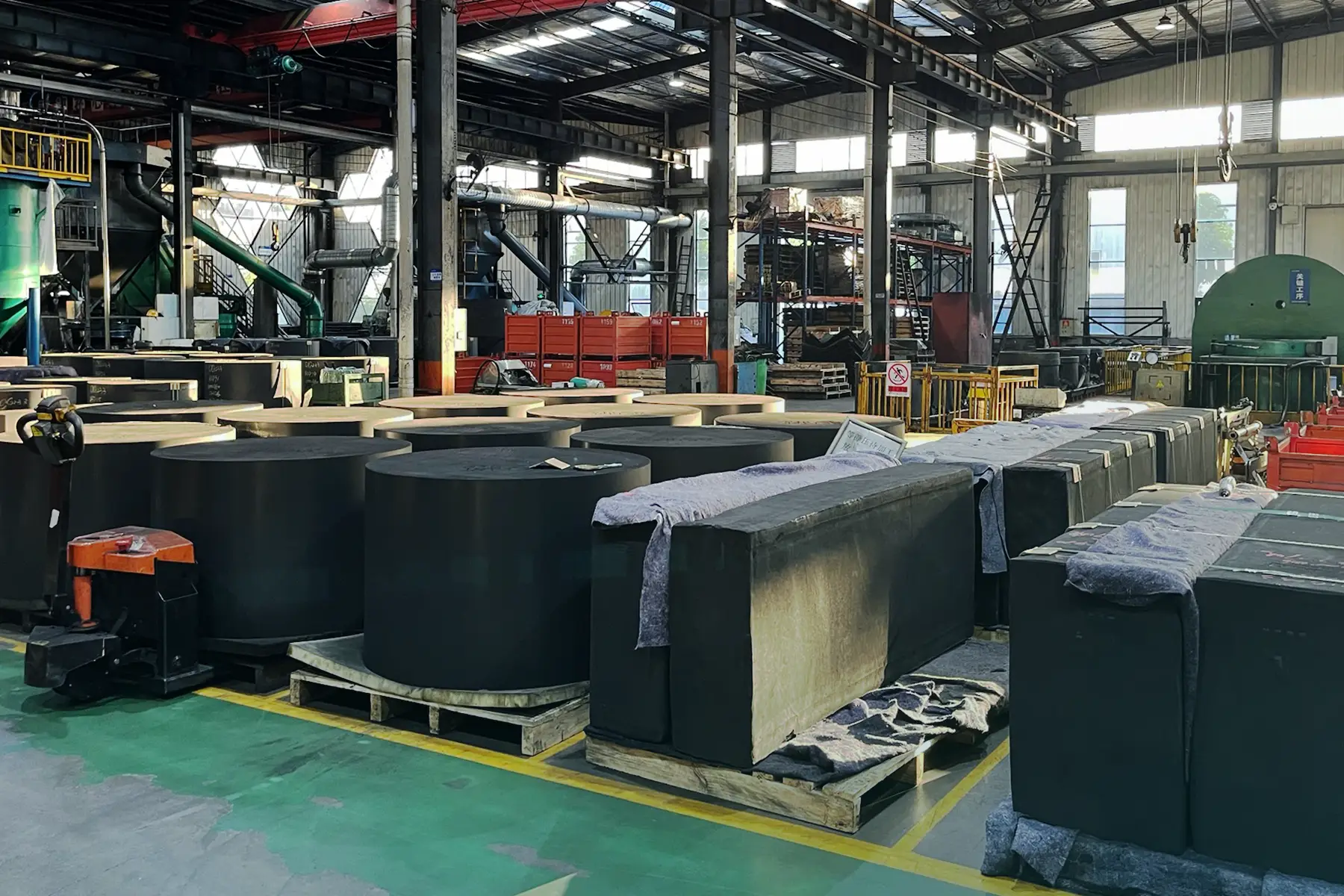
Max Graphite was built on the premise that world-class material quality and manufacturing precision should not be limited to the largest buyers or the highest-volume programs. Accessible Excellence means that any sizes of heat treatment producers or specialist semiconductor equipment manufacturers can source machined graphite components with the same dimensional verification discipline as the largest industry buyers.
That means on-site CMM inspection. It means 99% conformity as a tracked metric, not a marketing claim. It means our engineers who understand what happens to graphite geometry at operating temperature, not just at the measurement bench.
Let's talk
If you are sourcing machined graphite components and want to discuss tolerances, inspection documentation, or first-article processes for your application, we are available to review drawings and provide consultations.
Max Graphite: Vertically Integrated Graphite Manufacturer in China
Graphite Components for Thermal Fields: The Coupling with Carbon Felt