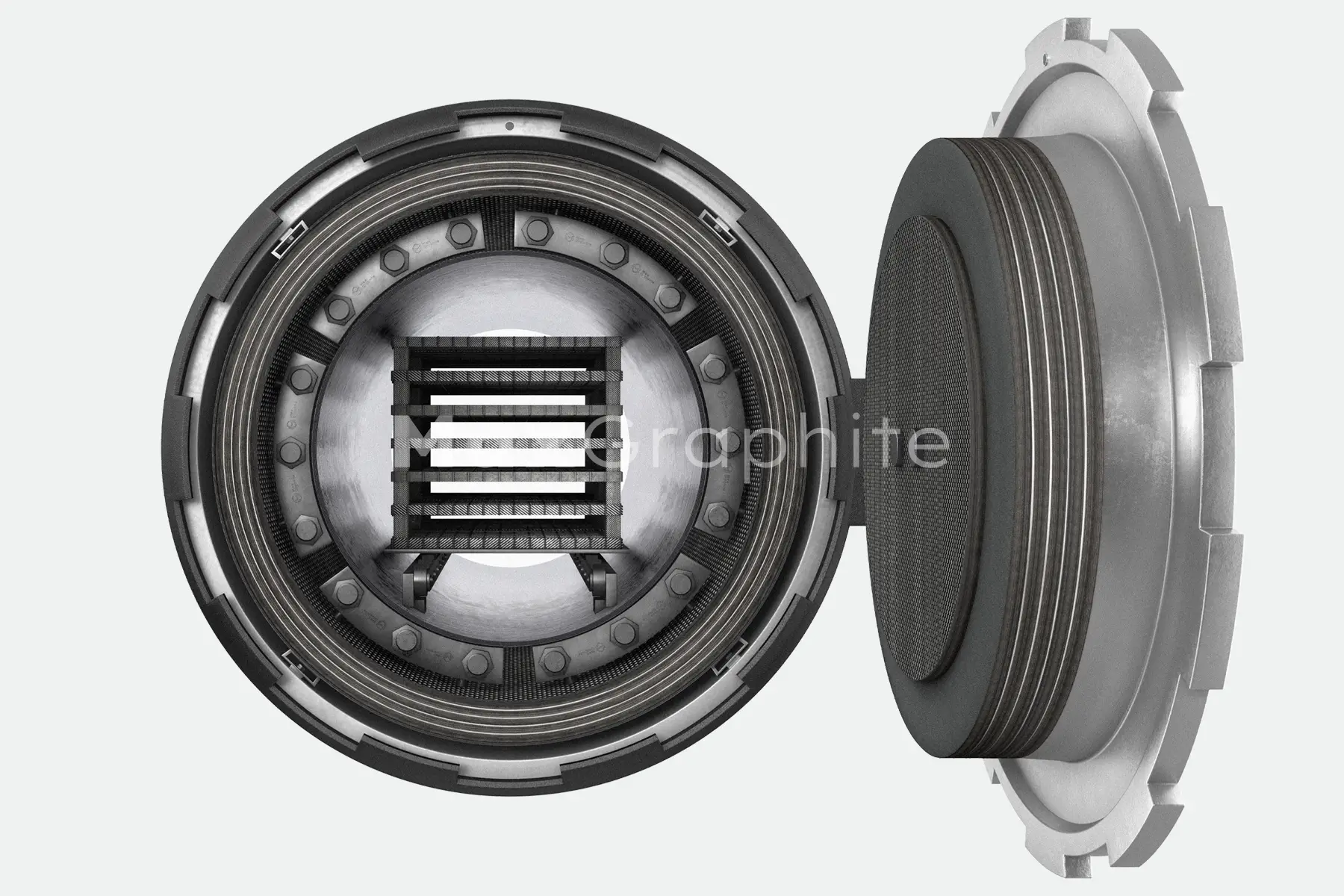
Inside the Graphitization Furnace: What Happens to Carbon at 2,400°C
What Is Graphitization?
Graphitization is a heat-treatment process that converts disordered carbon into ordered, crystalline graphite at extremely high temperatures.
After baking, a carbon product still has a largely disordered internal structure — carbon atoms sit in what materials scientists call amorphous or turbostratic arrangements. In this state, electrical conductivity is modest, thermal conductivity is limited, and purity falls short of what graphite applications require. Graphitization gives the carbon atoms enough energy to rearrange into the layered hexagonal lattice that defines graphite.
This is not a chemical reaction. It is a solid-state structural rearrangement: nothing is added, and nothing is removed except impurities. What changes is the arrangement of atoms — and that arrangement is what determines graphite's electrical and thermal conductivity, corrosion resistance, and thermal stability.
Loading the Furnace: The Last Step Before the Heat
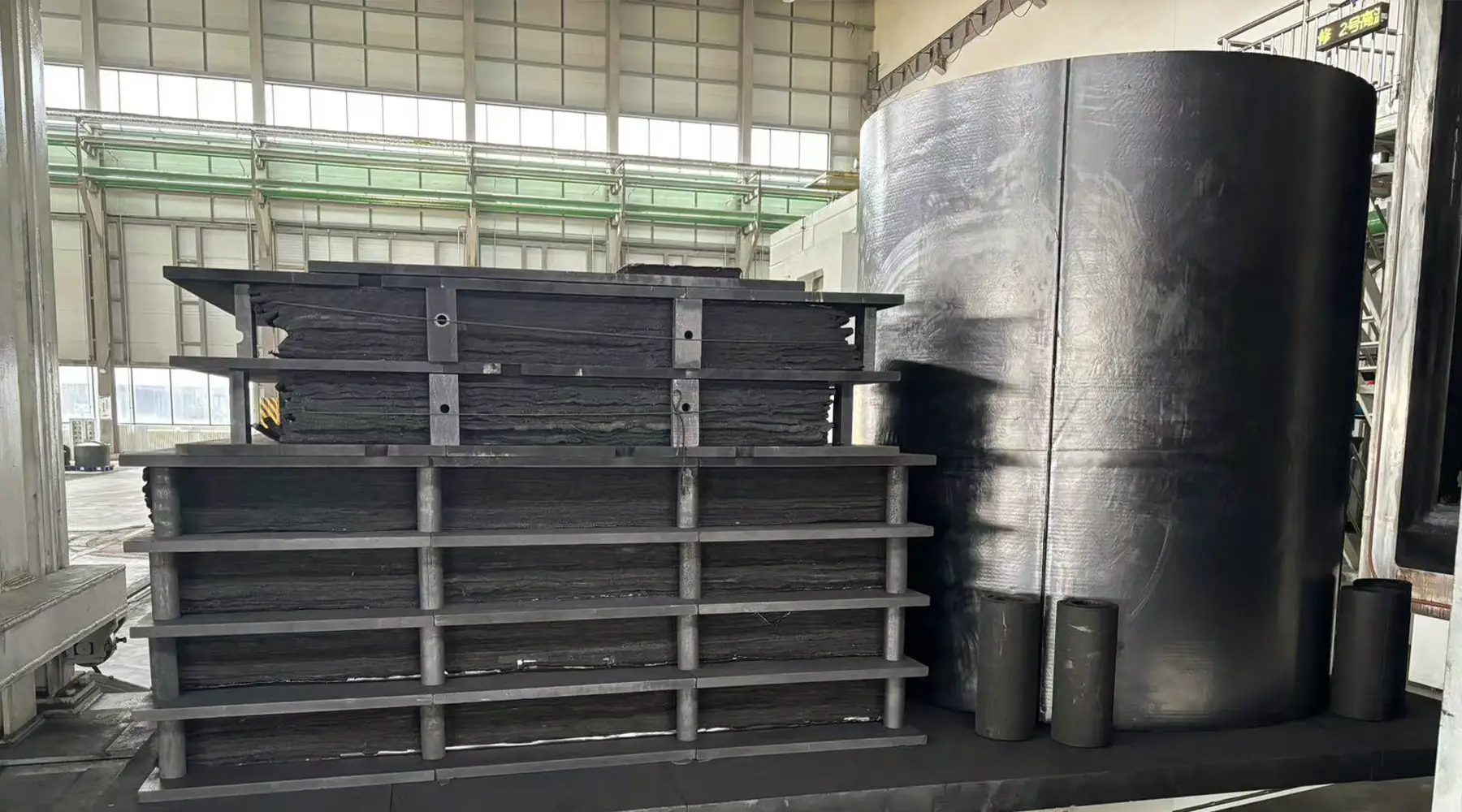
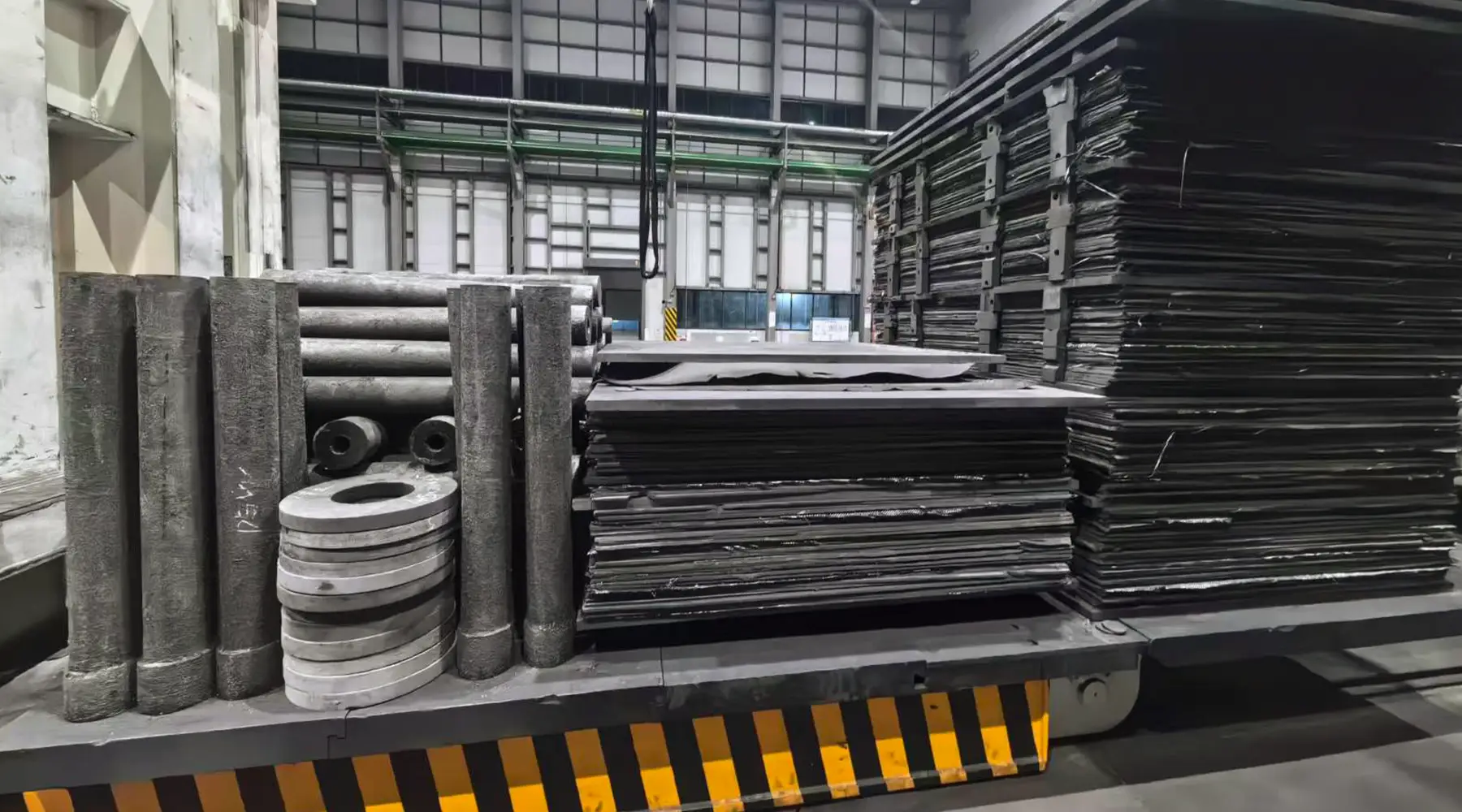
The photos show materials stacked on the furnace platform in a fixed pattern: spacing between layers, set distances at the perimeter. None of this is for appearance. Temperature distribution inside the furnace, the current path (which depends on furnace type), and the packing of insulation media all rest on a calculated loading structure. Loading quality directly affects how evenly a batch is heated — and even heating is what shows up later as piece-to-piece performance consistency.
Once loading is complete, the materials are covered in insulation media and the furnace is powered up. From this point until unloading, the process is measured in days.
What Happens Inside the Furnace?
The changes inside the furnace fall into three broad temperature stages:
- 1,000–1,500°C — residual volatiles escape. Volatile components not fully removed during baking continue to leave the material, and the structure begins to densify.
- 1,500–2,000°C — disordered carbon begins to order. Carbon atoms gain enough energy for local rearrangement, and jumbled carbon layers shift toward parallel stacking. Electrical resistivity drops noticeably through this stage.
- 2,000–2,400°C and above — crystal growth and purification. Graphite crystals keep growing, and the spacing between layers approaches the 0.3354-nanometer value of ideal graphite. At the same time, most metallic impurities vaporize and escape. A graphitization furnace is also a purification furnace — this is why fully graphitized products carry far lower ash content than ordinary carbon products.
Why Does Temperature Matter?
The degree of graphitization tracks the maximum treatment temperature. If the temperature is too low, the carbon layers never reach a high degree of order, and the material's properties sit somewhere between carbon and graphite. Industry practice generally treats 2,200–2,400°C and above as the range for full graphitization; our graphitization step runs at the 2,400°C level.
For the people who specify and use the material, that number stands for three things: lower electrical resistivity, better dimensional stability at high temperature, and higher purity. Two materials can both be sold as graphite and behave very differently in a furnace, an electrolytic cell, or a semiconductor hot zone — because the carbon to graphite transformation ran at different temperatures.
Unloading: After Days of Waiting
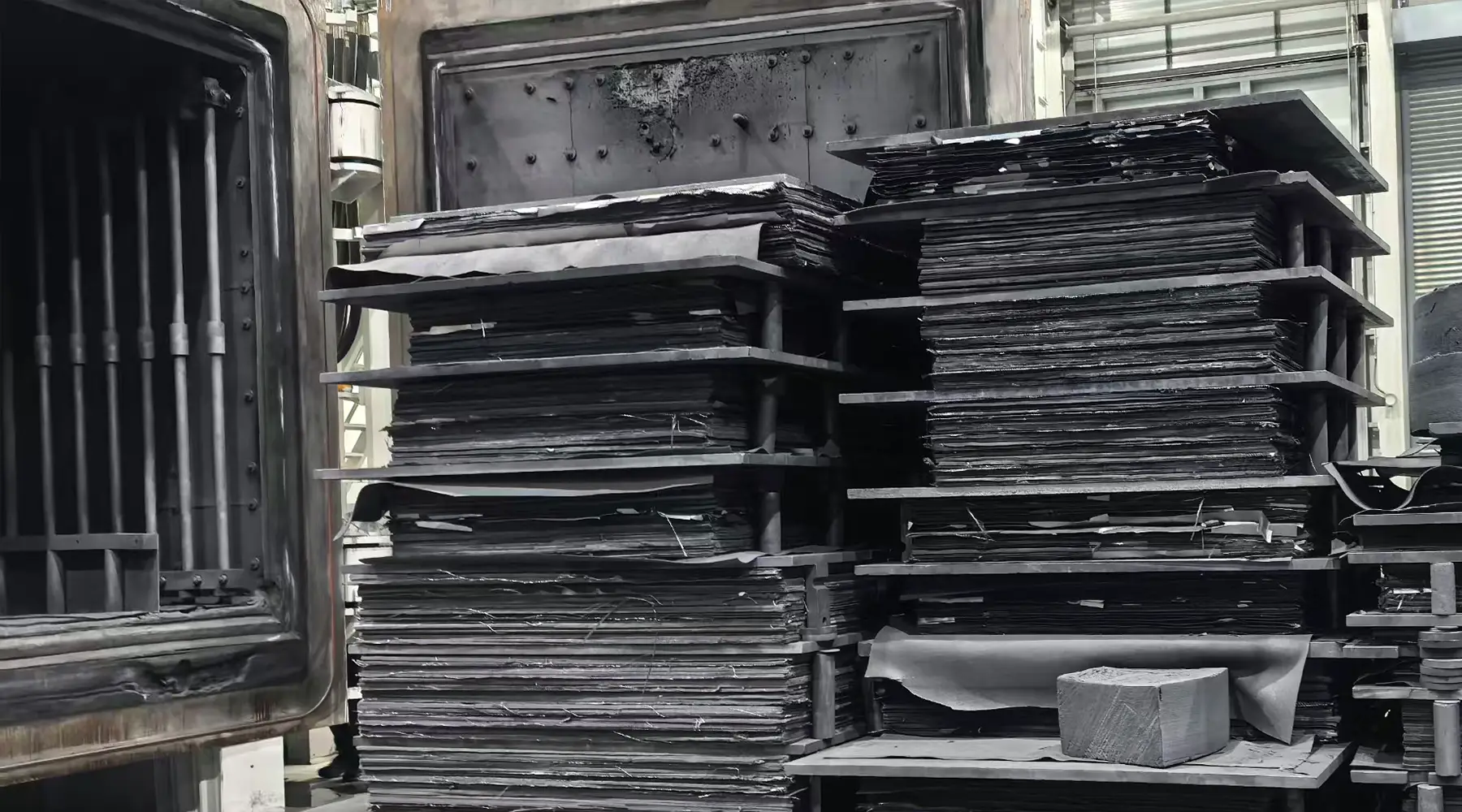
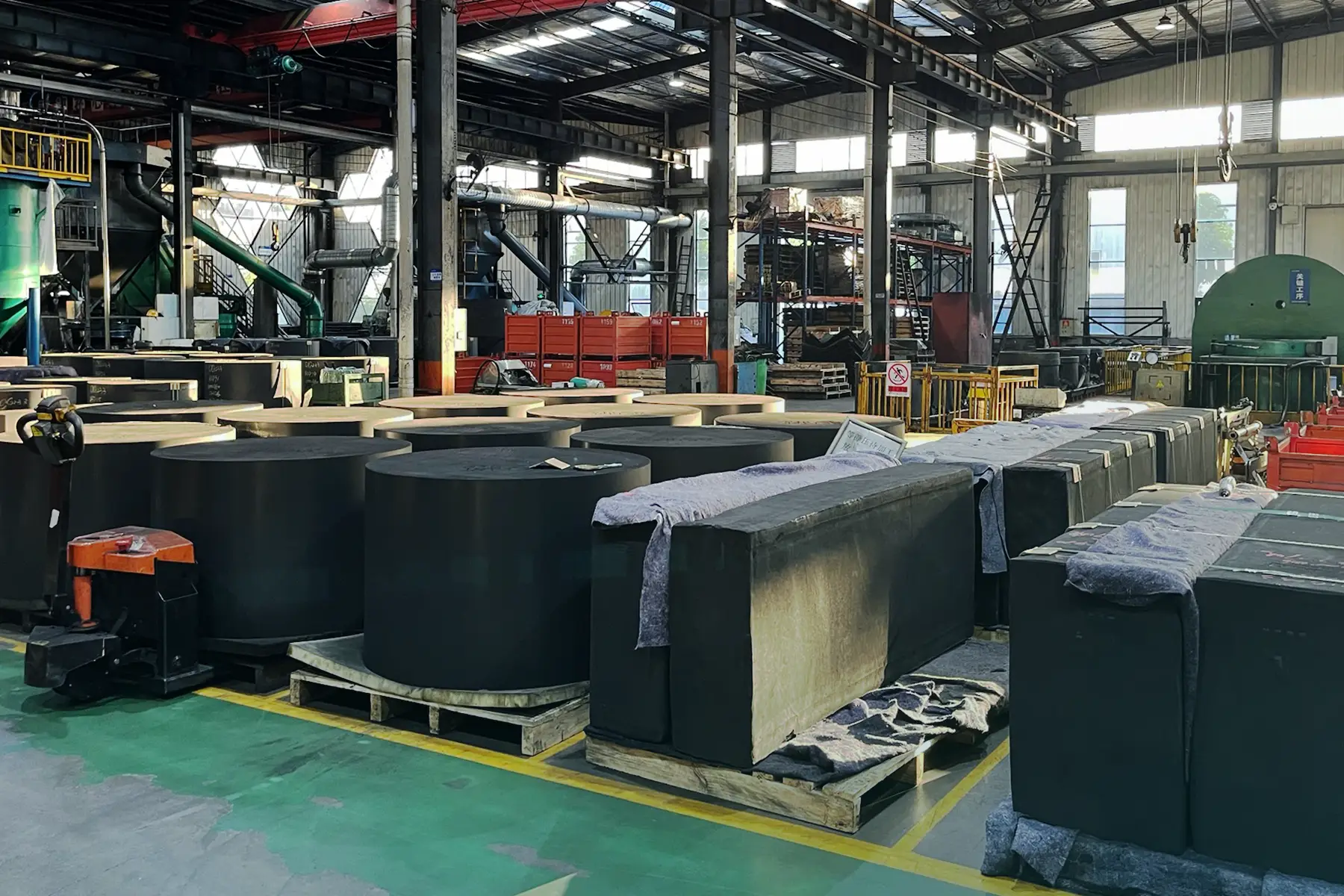
Heating, soaking at temperature, and then a long cool-down — the materials must cool inside the furnace until they can be handled safely. The stacks in the photos carry surface marks from the high-temperature treatment; that is a normal feature of the process. Inside the material, the carbon atoms have completed their shift from disorder to order.
After unloading come cleaning, testing, and machining. Graphitization sets the foundation of the material; every later step builds the finished product on that foundation.
What This Means for Material Performance
Once you understand the graphitization process, the performance gaps between graphite materials stop being mysterious. Raw material formulation, baking quality, graphitization temperature, and process control together determine the conductivity, strength, purity, and batch-to-batch behavior of the final material.
As the manufacturer running this step ourselves, we are responsible for everything between loading and unloading. That is also why we open our facility to customer visits and provide test documentation and certifications on request — the quality of a graphitization operation is better judged on the shop floor and in the data than in marketing copy.
A Question Worth Asking Your Supplier
Graphitization is the threshold step where carbon becomes graphite: temperatures at the 2,400°C level, cycles measured in days, and a rearrangement that happens atom by atom. The next time you evaluate a graphite supplier, two questions are worth asking: do you run graphitization in-house — and at what temperature?
Let's talk
Our graphitization line is open to customer visits. Contact us to discuss whether our materials fit your application, or to request samples.
Why Dimensional Accuracy in Machined Graphite Components Matters — and How It's Verified
Max Graphite: Vertically Integrated Graphite Manufacturer in China